
Automotive testing
Automotive Seat System Strength Test System
Multi-axis hydraulic rig for seat system strength and safety-belt anchorage strength
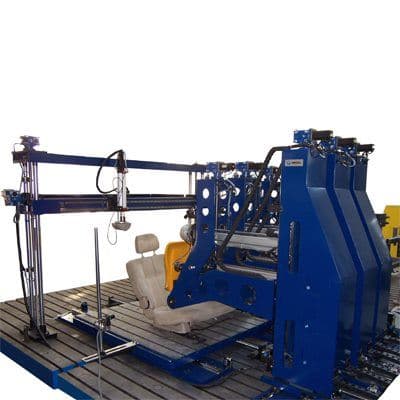
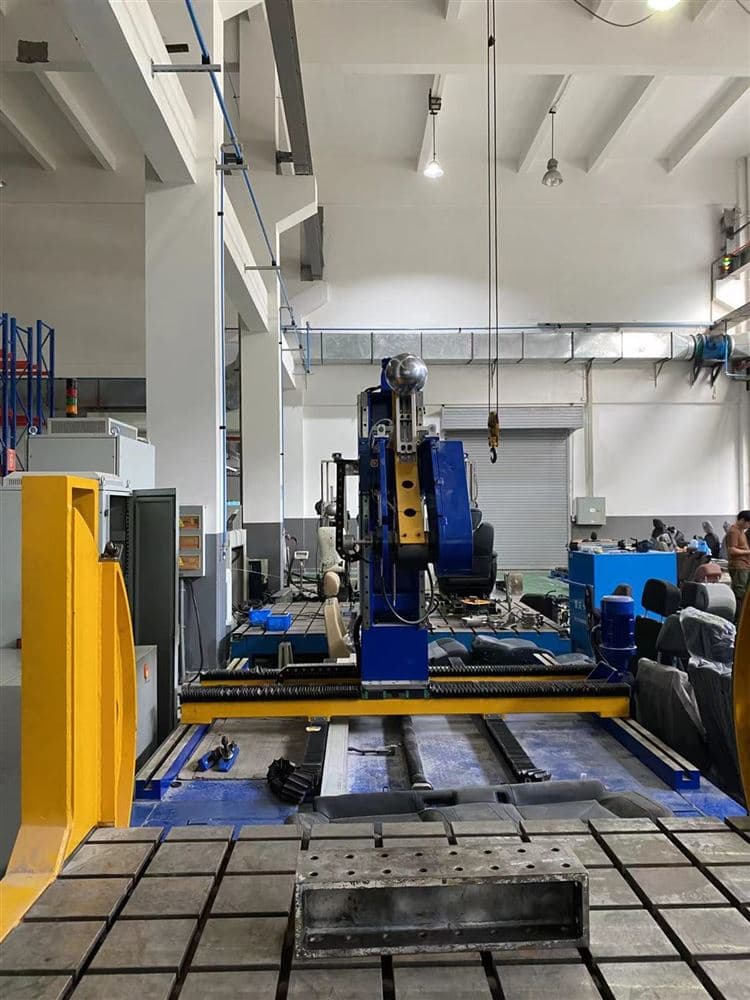
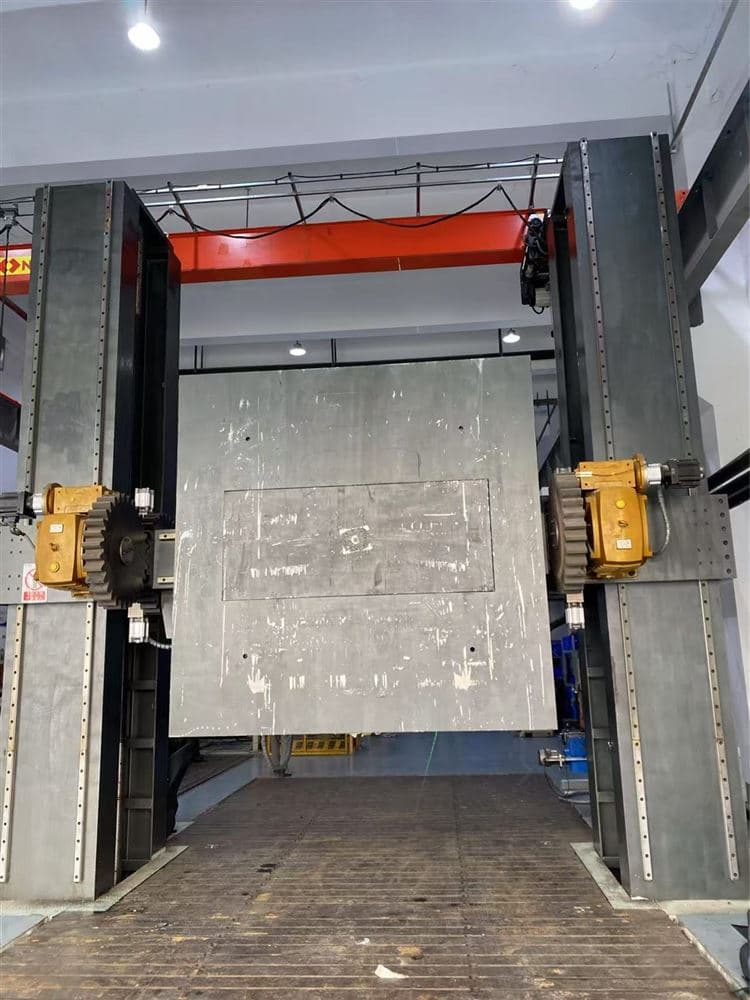
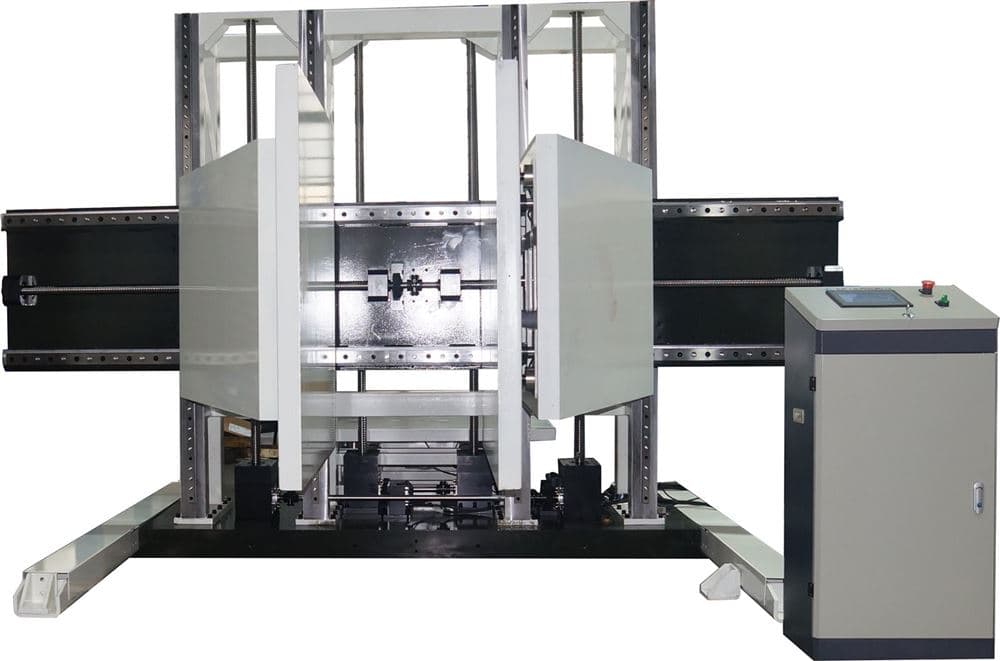
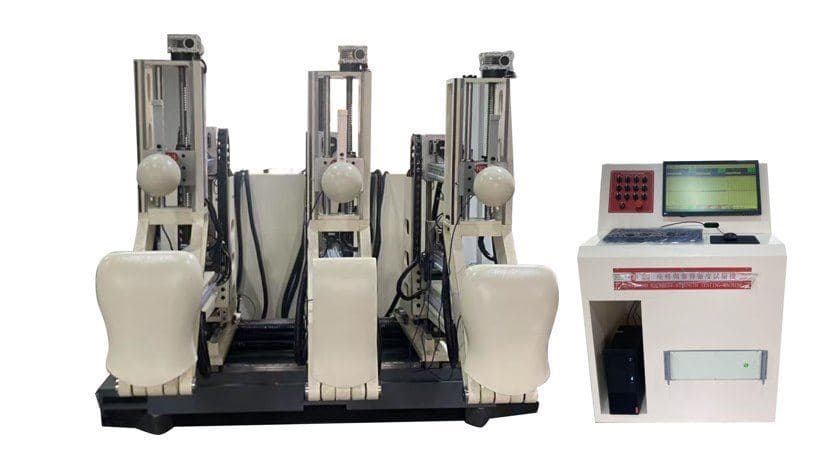
Overview
Seat System Strength Test System
A hydraulic test system for testing the strength of each part of a vehicle seat. Every hydraulic cylinder is controlled individually, so the load and the test conditions can be set axis by axis. An initial preload can be defined per axis; the test load is applied only after every axis has reached its preload.
Key features
- Each hydraulic cylinder is controlled individually, with per-axis load and test conditions
- A preload can be set for every axis; the test load sequence starts only once all axes have reached their initial load
- Force control and displacement control
- 1000 Hz sampling, with data filtering that meets the CFC60 filter class of ISO 6487
- Load holding time adjustable from 0.2 s to 120 s without steps
What it is used for
- Strength testing of the individual parts of a vehicle seat
- Seat system strength tests for passenger cars and buses
- Safety-belt anchorage strength on seat structures and body attachment points
- Multi-axis sequences in which several load axes must reach their preload before the test load runs
Standards this equipment is listed against
- GB 15083-2006
- GB 14167-2013
- GB 13057-2003
- ECE R17
- ECE R80
- ECE R14
- FMVSS 207
- VW EP (development standard)
Standard numbers are reproduced as they appear in the manufacturer's published product description.
Built in our own workshop
- Frame, guarding and fixtures are designed and assembled in our own workshop. The fixture is made to the part drawing you send.
- Servo drives, load cells and pneumatic components are specified by brand and model on the quotation — not left open.
- Each machine is assembled, then run-tested with a sample part, and ships with that run record.
- Documents with every machine: operating manual, electrical drawing, inspection record, packing list.
Send a part drawing and the fixture is quoted together with the machine, including the measurement range that part needs.
Technical specification
Seat System Strength Test System — Technical specification
| Load cells (tension / compression) | ±30 kN |
|---|---|
| Load cell accuracy | ±0.1 % FS |
| Rated output | 3 mV/V ±0.025 % |
| Non-linearity | 0.05 % |
| Non-repeatability | 0.02 % |
| Hysteresis | ±0.05 % |
| Cylinder stroke | 0–1000 mm |
| Stroke measurement accuracy | ±0.2 mm |
| Hydraulic cylinder loading speed | Reaches the preset force within 2 s; no-load maximum travel speed ≥320 mm/s |
| Load holding time | 0.2–120 s, stepless adjustment |
| Control mode | Force control / displacement control |
| Sampling rate | 1000 Hz |
| Data filtering | Meets the CFC60 filter class of ISO 6487 |
| Time to reach the specified load (load control) | As short as 1 s |
Specifications are taken from the manufacturer's published product description.
Keep reading
Keep reading
Multi-axis hydraulic rig for seat system strength and safety-belt anchorage strength
How a seat strength test is actually run: preload, control mode and the measurement chain
A seat strength test is decided by four things before the first Newton of load is applied: what each axis is set to, whether every axis has reached its preload, how the load is controlled, and what filter class the recorded data carries.
Three rulebooks, one seat: GB, ECE and FMVSS in seat and belt-anchorage testing
The same seat can be called up by three different rulebooks. That is why one test system is usually specified against several standard numbers at once.
Automotive — See the industry page
Strength, fatigue and durability test systems for seats, belt anchorages, body closures and wheels.
Wheel Dynamic Radial Fatigue Test Machine
Two-station rig with tyre cooling for dynamic radial fatigue testing of road wheels
Wheel Impact Performance Test Machine
13° / 30° impact testing of road wheels, with a 90° impact base
Buyer questions
Buyer questions
- Does this system test both the seat and its anchorages?
- Load is applied to the seat structure and to its mounting points, so strength and anchorage behaviour are measured on the same rig.
- Can we run our own test programme?
- Yes. Test profiles are set from the standard or internal procedure you work to, and confirmed before delivery.
Talk to us about this system
Send your test plan and the standards you work to, and we will come back with a configuration.
Talk to us about this system
Send your test plan and the standards you work to, and we will come back with a configuration.